2012 Toulouse Jewish School Shooting
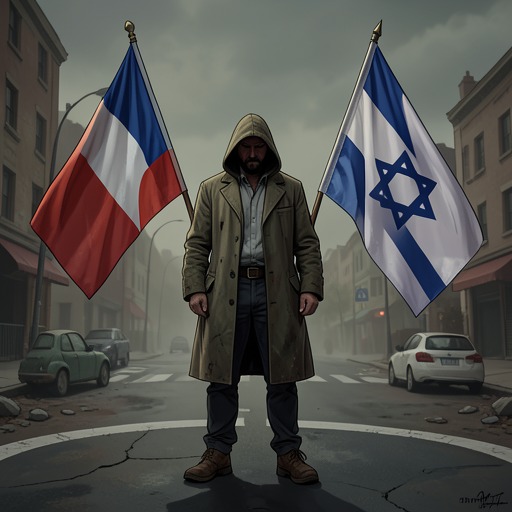
Les Choses humainesThe 2012 Toulouse Jewish school shooting is the rupture that turns a family’s fear of antisemitism into a decision to leave France. Three children and a father are killed at a Jewish school, and the attack alters the lives of Adam Wizman and his daughters: the family departs for Israel, discovers that refuge does not mean belonging, and returns to France carrying the consequences of the violence.
The attack and its immediate effect
On March 19, 2012, an Islamist radical attacked the Jewish school attended by Adam Wizman’s daughters, killing three children and a father. The crime was filmed with a GoPro camera fixed to the attacker’s chest. In the novel’s account, the violence shocks France: the killing of children because they were Jewish makes antisemitism not an abstract fear but a direct threat to the family.
Adam and his wife withdrew their daughters from the school immediately. For the family and many of their traumatized relatives, the attack changed the question from whether Jewish life in France could continue to how long they could remain. Their conversations repeatedly returned to the fear that European Jews could no longer ignore antisemitism that killed, and that they or their children might eventually have to leave to protect themselves.
Flight to Israel and return
In the aftermath, Adam and his family left France for Ra’anana, in Israel, where they rented an apartment for six months. The move was made in haste, under the pressure of fear and the wish to keep the children safe. It did not become a lasting home. Although Adam felt a profound attachment to Israel, he found that he could not imagine integrating there without changing himself. The everyday atmosphere felt aggressive to him, and the constant familiarity of life among other Jews did not produce the solidarity he had experienced when meeting Jews abroad as members of a minority.
The family’s disappointment also had a political dimension. Adam was troubled that other French Jews who had moved for similar reasons treated the Israeli-Palestinian conflict as an abstract reality or an unavoidable fate. In his view, accepting that impasse for the sake of personal security amounted to a moral defeat at odds with the humanist Judaism he claimed. The family returned to France, subdued by the failure of the move and the suffering it had brought.
The attack’s continuing consequences
The shooting remains a dividing line in the family’s history. Before it, Adam had accepted the possibility of living happily as a Jew in France; afterward, he believed that possibility had ended. He had understood Georges Perec’s novel A Void through the image of a missing letter: remove one letter from the Bible’s original text and its meaning changes. For Adam, the formal constraint of writing without the letter “e” suggested how persistently Jewish disappearance remained imaginable. The attack gave that apprehension an immediate, personal force.
The family’s return did not restore their former life. Adam resumed teaching French at a Jewish school, and the family lived within a close communal world. His wife grew more religiously observant, a change that would deepen the distance between them. The attack also forms part of Mila Wizman’s history of trauma: at trial, a psychologist describes her as having had a happy childhood until the school massacre, after which she developed psychological difficulties and struggled at school. The shooting is therefore both a public act of antisemitic violence and a continuing private wound, shaping decisions, family relationships, and the lives of the children who survived.